NAD+ Research: Exploring Cellular Energy, DNA Repair, and Metabolic Function

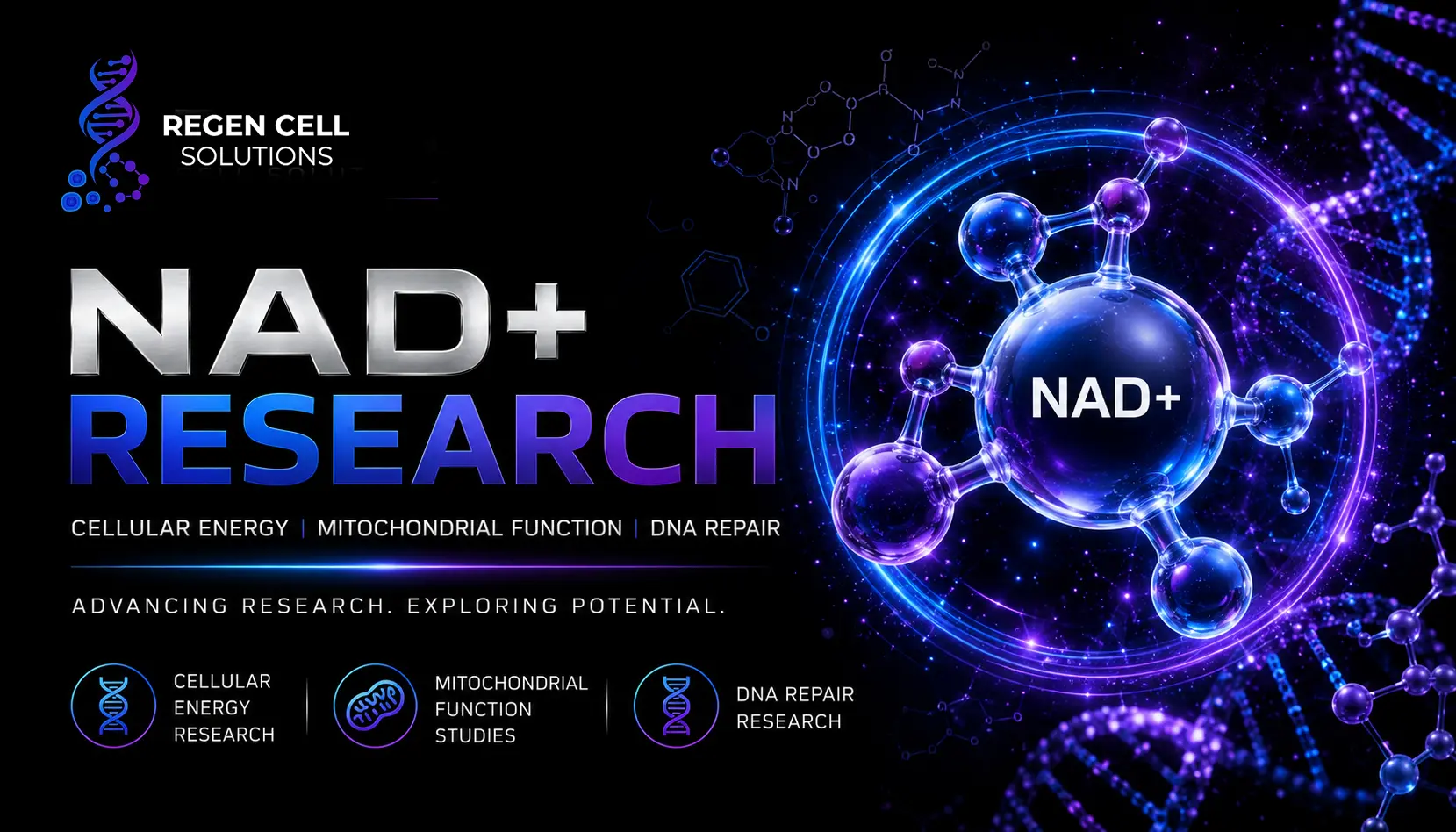
NAD+ has become one of the most discussed molecules in modern cellular biology, longevity research, and metabolic science. Short for nicotinamide adenine dinucleotide, NAD+ is a naturally occurring coenzyme found in living cells. It plays an essential role in energy metabolism, redox balance, DNA repair, and cellular stress-response pathways. Research literature describes NAD+ as a central metabolite involved in metabolic pathways, chromatin regulation, DNA repair, and cellular senescence.
At Regen Cell Solutions, NAD+ is approached from a research-focused perspective. Our products are intended for professional use only and are designed for qualified laboratory and research applications.
What Is NAD+?
NAD+ is a coenzyme that participates in many biological reactions. It exists in two main forms:
NAD+ — the oxidized form
NADH — the reduced form
Together, NAD+ and NADH help transfer electrons inside cells. This electron-transfer activity supports the process by which cells convert nutrients into usable energy. Cleveland Clinic describes NAD+ and NADH as working like a shuttle that moves electrons back and forth to help keep cellular energy flowing.
Because of this role, NAD+ is closely connected to mitochondrial activity, metabolic function, and cellular repair pathways.
Why NAD+ Matters in Cellular Research
NAD+ is not only involved in energy production. It also acts as a required co-substrate for several enzyme families that regulate cellular health and repair activity. These include:
Sirtuins
Sirtuins are NAD+-dependent enzymes involved in metabolic regulation, stress response, and cellular maintenance. Research has linked sirtuins to energy metabolism and DNA repair pathways because their activity depends on NAD+ availability.
PARPs
PARPs, or poly ADP-ribose polymerases, are enzymes involved in the DNA damage response. Scientific reviews describe PARPs as NAD+-consuming enzymes that help support DNA repair and genomic stability.
CD38 and Other NAD+-Consuming Enzymes
Other enzymes also use NAD+ as part of cellular signaling and immune-related pathways. Because multiple systems depend on NAD+, researchers study how NAD+ metabolism may influence cellular aging, mitochondrial function, and stress adaptation.
NAD+ and Cellular Energy Production
One of the most important areas of NAD+ research is cellular energy metabolism. NAD+ helps carry electrons during metabolic reactions, especially those connected with mitochondrial function.
Mitochondria are often described as the energy-producing structures of the cell. NAD+ supports the flow of electrons that contributes to ATP production, which is the primary energy currency used by cells.
Research Interest in Mitochondrial Function
NAD+ research is often connected with mitochondrial studies because mitochondrial performance depends heavily on balanced redox activity. Researchers study NAD+ to better understand:
- Cellular energy regulation
- Mitochondrial efficiency
- Oxidative stress response
- Metabolic adaptation
- Age-related changes in cellular function
Scientific reviews have described NAD+ as a central metabolite involved in energy and redox homeostasis, as well as DNA repair and other biological processes.
NAD+ and DNA Repair Research
DNA is constantly exposed to internal and external stress. Cells rely on repair systems to identify and respond to DNA damage. NAD+ is important in this area because PARP enzymes use NAD+ during DNA repair activity.
When DNA damage occurs, PARPs help coordinate repair signaling. Because PARP activity consumes NAD+, researchers are interested in how NAD+ availability affects genome maintenance and cellular resilience.
A 2022 review notes that numerous NAD+-dependent reactions are involved in preserving genome stability and supporting the cellular DNA damage response.
NAD+ and Sirtuin Activity
Sirtuins are another major reason NAD+ has become important in research. These enzymes depend on NAD+ to function.
Areas of Sirtuin-Related Research
Sirtuin activity is studied in connection with:
- Cellular stress response
- Metabolic regulation
- Mitochondrial biology
- DNA repair
- Inflammatory signaling
- Cellular aging models
Because sirtuins require NAD+, changes in NAD+ availability may influence how these pathways behave in laboratory models. Reviews have described the relationship between NAD+ and sirtuins as a major topic in aging and longevity biology.
NAD+ and Aging Research
NAD+ levels have been reported to change with age and metabolic stress, which has led to growing interest in NAD+ metabolism within aging-related research. However, it is important to separate research interest from unsupported medical claims.
Current research suggests NAD+ is biologically important, but human evidence does not support broad claims that NAD+ can “reverse aging” or treat disease. Academic and medical sources continue to emphasize that NAD+ is promising as a research target, but more clinical evidence is needed before making strong claims about direct health outcomes in humans.
At Regen Cell Solutions, NAD+ is presented for professional research applications only, not for personal therapeutic use.
NAD+ Precursors vs NAD+
In research, NAD+ is often discussed alongside NAD+ precursors such as:
- Nicotinamide riboside
- Nicotinamide mononucleotide
- Nicotinamide
- Tryptophan pathway intermediates
These compounds are studied because cells can use them in different pathways to produce or recycle NAD+. Research into NAD+ precursors has expanded rapidly, especially in metabolic and mitochondrial studies.
However, direct comparisons between NAD+, NADH, and precursor compounds depend on the model system, route of study, and experimental purpose.
Why Researchers Study NAD+
NAD+ continues to attract attention because it connects multiple biological systems. It is not limited to one pathway. Instead, NAD+ sits at the center of several important cellular processes.
Key Research Areas Include:
Cellular Energy
NAD+ helps support redox reactions involved in cellular metabolism and ATP production.
Mitochondrial Function
Researchers study NAD+ to better understand mitochondrial efficiency and cellular energy balance.
DNA Repair
NAD+ is required by enzymes involved in DNA damage response and genome maintenance.
Sirtuin Biology
NAD+-dependent sirtuins are studied for their role in metabolism, stress response, and cellular regulation.
Cellular Aging Models
NAD+ metabolism is commonly studied in aging-related laboratory models due to its role in repair and metabolic pathways.
Professional Use Only
Regen Cell Solutions products are intended strictly for professional use only. NAD+ and related research compounds are supplied for qualified laboratory, analytical, and research purposes.
They are not intended for human consumption, diagnostic use, therapeutic use, or disease treatment.
Researchers should always follow applicable laboratory safety protocols, institutional guidelines, and regulatory requirements when handling research compounds.
Conclusion
NAD+ remains one of the most important molecules in modern cellular research. Its role in energy metabolism, mitochondrial function, DNA repair, sirtuin activity, and cellular stress response makes it a valuable focus for laboratory-based studies.
As research continues, NAD+ may help scientists better understand how cells regulate energy, repair damage, and respond to biological stress. For professional laboratories and qualified researchers, NAD+ represents a key compound in the study of cellular function and metabolic biology.
Regen Cell Solutions provides trusted solutions built for professionals, with a focus on premium research compounds, professional-use standards, and quality-focused laboratory applications.